How to Fix Pixelated Photos and Make Them Smooth and Sharp
Fix pixelated photos from old websites, early digital cameras and zoomed-in crops: why pixelation happens and how AI reconstructs smooth, sharp detail.
By Ayoub Farid · · 2 min read


Pixelation, those visible square blocks, happens when a small image is shown larger than its resolution allows. Old website photos, early digital camera images, crops from group photos and screenshots are typical victims. AI can turn blocky images into smooth, detailed ones.
Why photos become pixelated
- Tiny originals: early web images were often 300–600 pixels wide.
- Heavy cropping: a face cropped from a group photo might be 60 pixels across.
- Digital zoom on old phones and cameras.
- Screenshots of photos at small sizes.
- Compression: JPEG blocks look similar to pixelation (see fixing compressed WhatsApp photos).
First: find a larger version
Before fixing a pixelated image, ask:
- Does the person who posted it have the original?
- Is there a print you could scan instead?
- Is there an older backup (CD, old computer, email attachment) with a bigger file?
A larger original always wins.
Fix it with AI
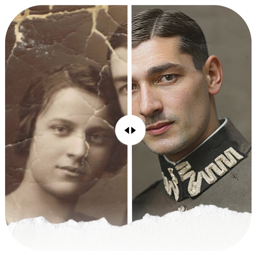
Simple resizing makes pixels bigger and blurrier. AI enhancement recognizes shapes (eyes, hair, edges) and reconstructs smooth, sharp detail at a higher resolution. In Refixo, choose the image and tap Restore. The photo is enhanced and upscaled, faces are sharpened and colors corrected.
What to expect
| Starting size of a face | Likely result |
|---|---|
| 150+ pixels wide | Very good, faithful |
| 60–150 pixels | Good, check the likeness |
| Under 60 pixels | Plausible face, may not match the real person |
See sharpening faces in old photos for small-face tips.
Avoid re-pixelating
Once you have a good version:
- Save it at full quality.
- Share files rather than screenshots.
- Send as documents/files in messaging apps to avoid compression.
Related: upscaling old photos, enhancing old digital camera photos.
Common sources of pixelated family photos
- Old memorial and genealogy websites that displayed small thumbnails.
- Early 2000s email attachments, often resized to a few hundred pixels.
- Profile pictures saved from social networks.
- Video frames captured from old home videos, which were low resolution to begin with.
- Crops of distant people from group photos.
For each, it's worth asking relatives whether they have a larger version. Someone often has the original print or file in a drawer or on an old computer. When you find it, scan or copy it at full size and keep it in your family archive so the pixelated copy never has to be used again.
Frequently asked questions
Can a pixelated photo be fixed?
Yes. AI enhancement reconstructs smooth, sharp detail. Results depend on how small the original is.
Why does my photo get pixelated when I zoom in?
It doesn't have enough pixels for that size. Enhancement and upscaling add detail.
Is pixelation the same as blur?
No. Pixelation shows square blocks; blur is soft. AI handles both.
Can I fix a pixelated photo on iPhone?
Yes. Refixo enhances and upscales photos directly on iPhone and iPad.
Restore it in seconds
Bring your old photos back to life
Refixo's AI removes scratches, tears and stains, sharpens faces and colorizes black & white photos in seconds. Free to download on iPhone and iPad, with a 3-day free trial.
Download on theApp Store